Carp know-how
Bite alarms: how they work and how to set up
An electronic bite alarm turns every movement of your line into a tone and a light, while a hanger or swinger shows you which way the fish is moving. Sensitivity is the setting that counts, tone, LEDs and a receiver are about comfort.
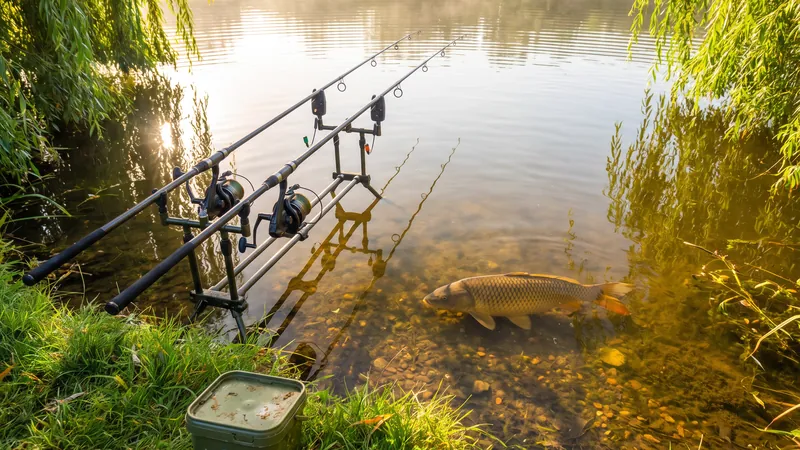
What you need
- One alarm per rod, with a thread that fits your bank sticks, buzz bar or rod pod
- Hangers (bobbins on a chain or cord) for most situations, with bodies from around 3g to 75g
- Swingers with a rigid arm and sliding weight for windy days
- A receiver if you want one, often sold separately
- Spare batteries, usually 9V or AAA
- Snag ears, ideally rubber-lined, so a savage take cannot pull the rod off the rest
- Rear rests (butt rests) and a reel with a free-spool system or a finely adjustable drag
Step by step
- Check your licence, permit and the fishery rules first, including how many rods you can use. Night fish only where it is allowed.
- Screw the alarm onto your bank stick, buzz bar or pod and lay the rod in so the line runs over the wheel or sensor. Point the rod tip as directly at the hookbait as you can: fewer line angles mean sharper indication.
- Cast out, let the line sink and then pay off a little. A semi-tight line, with the hanger sitting a short drop below the rod, suits most situations.
- Clip the hanger on between reel and alarm. At its top position, the gap to the alarm should be about three fingers, roughly 5cm. A bigger gap makes indication less sensitive.
- In wind, use a swinger: the rigid arm stops the head blowing around and causing false bleeps. Move the sliding weight to tune how easily it reacts.
- Set sensitivity as high as wind and waves allow. High settings register the smallest movement, lower ones filter out false alarms.
- Give each rod its own tone and, where possible, its own LED colour so you know which one is going in the dark. Set the volume so you will hear it without disturbing anyone else.
- Drop-back: when a fish swims towards you, the hanger falls. Pick up the rod, wind down to take up the slack and only strike once you are in contact.
- Fish you return (where the rules allow or require it) go on a wet unhooking mat. Fish you keep should be stunned and killed straight away.
Common mistakes
- Fishing without a hanger or swinger: the alarm only registers line pulled over the wheel, so a drop-back can go unnoticed.
- Cranking sensitivity to full in a strong wind: the alarm bleeps constantly. A lower setting, a swinger or a line clip sorts it out.
- Striking at liners: fish brushing the line lift the hanger gently and steadily, while real takes pull it up in a sharp, positive, jerky way.
- Treating the receiver as a licence to wander: leaving rods unattended is against the rules on many waters, and a hooked fish can reach a snag.
- Using splash-resistant budget alarms in heavy rain: for wet sessions you want properly waterproof heads.
Tips
- Braid often loops over weed and the hanger may not drop back. Fluorocarbon can catch on debris and hold the hanger up, which can look like a take.
- Liners tell you where fish are patrolling. Note which rod gets the most activity and move hookbaits onto that route.
- A line clip in front of the alarm stops false bleeps and line creep in the wind and helps hooking on very tight lines.
- Big switches or simple knobs are easier with cold, wet hands in the dark, so look for them when you buy.
- One 9V battery can last up to about a year depending on use. Carry a spare anyway.
Size limits, closed seasons, night fishing and aids such as bait boats are set by the local rules and the fishery. Carp rules in the overview
Quick answers
How does a bite alarm work?
The line runs over a roller wheel or plate. When the line moves, the wheel turns and triggers the sound and LED, while other designs sense vibration in the line.
Do I need a swinger or a hanger?
Hangers are the versatile standard for most situations. Swingers are the choice in wind because the rigid arm keeps the head steady.
Is a receiver worth it?
A receiver alerts you when you are a few steps from the rods or asleep in the bivvy, where night fishing is allowed. You still need to stay within reach of your rods.
What sensitivity should I use?
High in calm conditions, a notch lower in wind and waves, or switch to a swinger. Sensitivity is the setting that most directly decides how well your alarm performs.
More carp know-how
Sources (6)
- anglingtimes.co.uk/tackle-reviews/accessories/the-best-carp-fishing-bi
- anglingtimes.co.uk/advice/tips/when-to-fish-tight-or-slack-lines/
- anglingtimes.co.uk/advice/tips/what-do-liners-actually-mean-lewis-read
- carpology.net/article/your-guide-to-indicators
- carpology.net/article/the-history-of-the-bite-alarm
- anglingtrust.net/wp-content/uploads/2025/09/Best-Practice-Guide-to-Fre
Last checked 2026-10-25. Found a mistake? Write to [email protected].
Know more?
Additions, photos of your catches or a mistake in the text: write to us and we will gladly credit you as a helper.
Send a tip