When to fish
Best time to fish: time of day, weather and moon
The best time to fish is usually dawn or dusk with steady or slowly falling pressure. Here is why, and what changes by species.
Guide sections: Learn to fish: Best time to fish
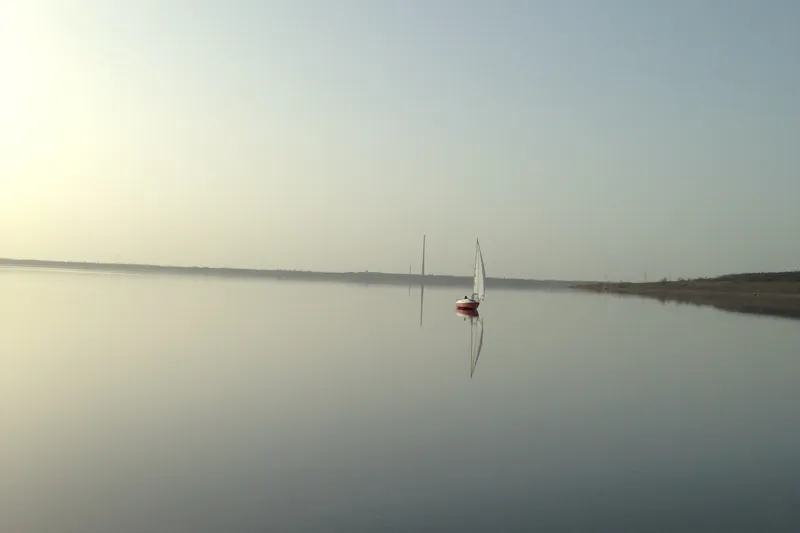
1. Time of day: dawn and dusk beat midday
In low light predators see their prey well while the prey struggles to see them. That is why most species have their windows around sunrise and sunset. Our fishing forecast uses the same rules of thumb.
Best time by species, from the species profiles
- Largemouth bass: In spring around the spawn, when fish move shallow; otherwise around cover such as weed beds, timber and docks. In the heat of summer and in winter big bass get sluggish, and large live shiners tend to work better (Wikipedia).
- Walleye: Dawn, dusk, night and overcast days; a wind-driven "walleye chop" boosts feeding. Shallower in spring and fall, deeper in summer; a classic ice fishing target in winter (Wikipedia).
- Channel catfish: Late spring through fall; because it finds food by smell and taste, it bites well in muddy water and after dark (Wikipedia).
- Crappie: Spring, when fish move shallow to spawn; otherwise around sunken trees, docks and other cover. According to Wikipedia crappie feed mostly early in the morning and around midnight.
- Northern pike: During the day and at dusk, especially in spring after spawning and in autumn.
- Rainbow trout: Morning and evening, especially in the cooler season from autumn to spring.
Each with sources there.
2. Weather: read pressure and wind
- Pressure
- If it falls slowly over the day or holds steady, our forecast expects more bites. If it rises fast, for example after a cold front, fewer.
- Wind
- A light to moderate breeze ripples the surface, which makes fish bolder and pushes food to the windward bank. Gales make fishing hard and unsafe.
- Clouds and rain
- Overcast skies stretch the low-light window through the day. How rain changes things has its own page.
3. Water: temperature matters more than air
Fish are cold-blooded. Their metabolism follows the water temperature, not the air. In spring the first bites come in shallow bays that warm quickly, in high summer early in the day and deeper, in winter slowly and deep. Where a gauge measures water temperature, our map shows it.
4. Moon and tides
Solunar theory predicts bite times from the position of the moon. The evidence is mixed: a study of 381 tournament days off Australia found a link with the moon phase for five of eight offshore species and none for three. Our forecast therefore gives new and full moon only a small bonus.
On the coast the tide often matters more: moving water brings food. When the tide turns at dawn or dusk, our US forecast counts that as a plus.
Sources: Lowry, Williams, Metti 2007, Fisheries Research 88
5. Season and rules
The fishing calendar shows which species are in season each month and region. Always check closed seasons and size limits before you go.
Quick answers
What time of day is best for fishing?
For most species the first and last hour of light, around sunrise and sunset. Catfish and eel bite mostly at night, and cod in winter often in full daylight.
Do fish bite better when the barometer is falling?
As a rule of thumb, yes: ahead of a front, while pressure falls slowly, many fish are active. When it rises fast after the front, fishing usually gets slow. There is little solid research on it, so treat it as experience.
Does the moon affect fishing?
For some species yes, for others no. A study of tournament catches found a link with the moon phase for several offshore species and none for others. The solunar table shows moon times for every day.
What season is best for fishing?
It depends on the species: predators often in fall, carp in summer, cod in winter. The fishing calendar shows what is in season each month; check your state rules for closed seasons.
Everything here is a rule of thumb, not a guarantee. Our forecast stays a forecast until we have checked it against real catches.
Know more?
Additions, photos of your catches or a mistake in the text: write to us and we will gladly credit you as a helper.
Send a tip