Comparison
Brown trout vs rainbow trout: how to tell them apart
How to tell Brown trout from rainbow trout, with features, size, habitat and baits side by side.
Choose a page
The quick difference
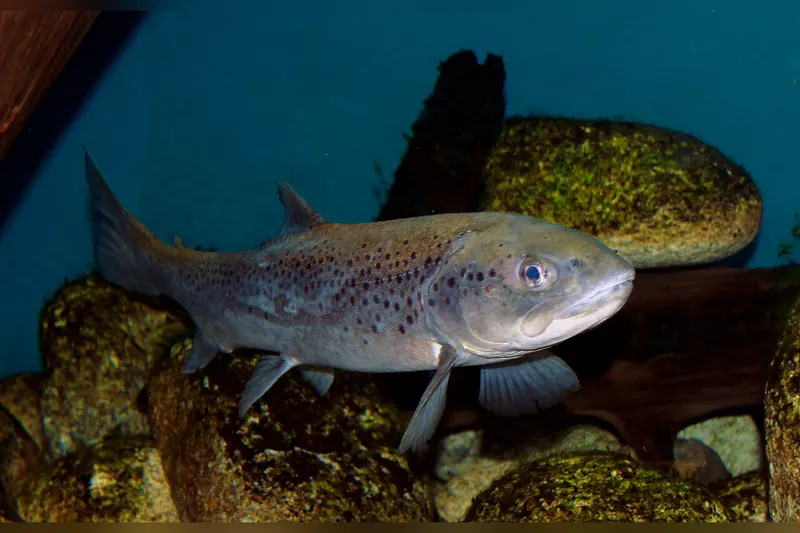
Brown trout: Looks like the rainbow trout, but has red spots with a pale ring and no reddish side band.
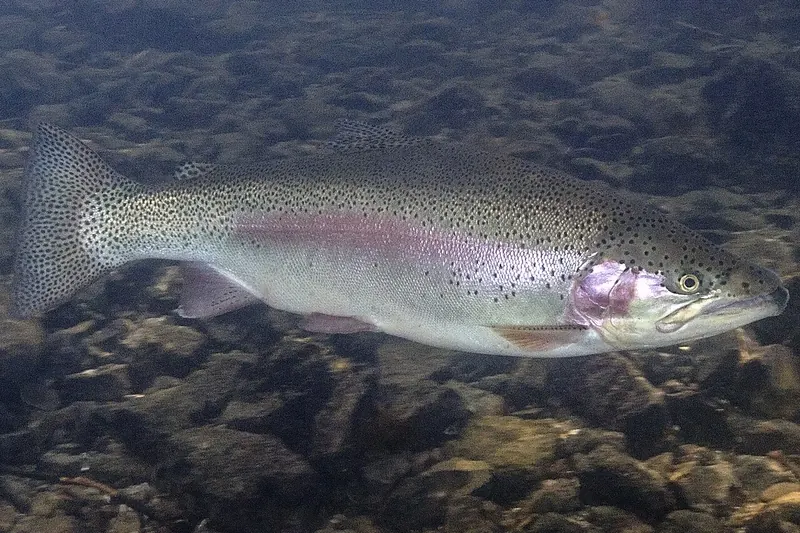
Rainbow trout: Often mistaken for the brown trout: the rainbow trout has a reddish side band and only black spots, the brown trout has red spots with a pale ring.
Side by side
How to recognise it
Brown trout
- Red spots with a pale ring, plus black spots
- Olive-brown back, white-yellow belly
- Small adipose fin between the dorsal and tail fins
rainbow trout
- Reddish, shimmering band along the flanks
- Lots of black spots, also on the dorsal and tail fins
- Small adipose fin between the dorsal and tail fins
Size and age
Brown troutup to 140 cm · 50.0 kg · 38 years
rainbow troutup to 123 cm · 25.9 kg · 11 years
Habitat
Brown troutFast-flowing, cool, clear and oxygen-rich streams and rivers with a gravel or sandy bed. It is very loyal to its spot and defends its own territory.
rainbow troutCool, oxygen-rich rivers and lakes, preferring clear streams. In many waters it does not breed naturally and is stocked, for example in trout lakes.
Spawning
Brown troutOctober to January (general guide, varies by region)
rainbow troutDecember to May in Central Europe (general guide, varies by region)
Methods
Brown troutFly fishing, Lure fishing with a light rod, Float fishing
rainbow troutLure fishing (spinning), Fly fishing, Float or bottom fishing
Baits
Brown troutDry fly, Wet fly, Inline spinner, Spoon
rainbow troutInline spinner, Spoon, Trout paste, Flies
On the table
Brown troutAn excellent food fish with a delicate flavour.
rainbow troutTender, mild flesh; cooked whole, the bones come away easily.
Conservation status
Brown troutGerman Red List (freshwater fish 2023, species Salmo trutta): threatened, in 2009 still not threatened. IUCN (Salmo trutta): not threatened (Least Concern, 2022).
rainbow troutGerman Red List (freshwater fish 2023): not assessed, as it is a non-native species. IUCN: not threatened (Least Concern, 2020).
Next
Sources (6)
Know more?
Additions, photos of your catches or a mistake in the text: write to us and we will gladly credit you as a helper.
Send a tip