Comparison
Northern pike vs zander: how to tell them apart
How to tell Northern pike from zander, with features, size, habitat and baits side by side.
Choose a page
The quick difference
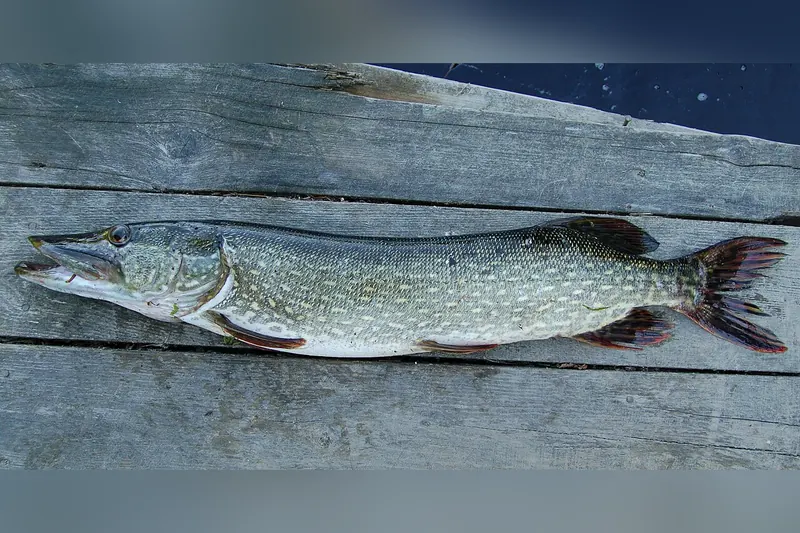
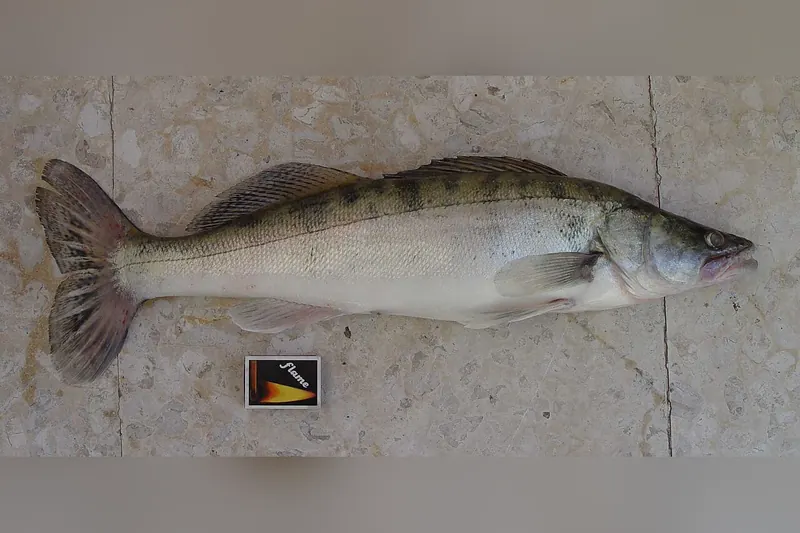
Northern pike: Young pike are sometimes mistaken for zander: the pike has just one dorsal fin set far back, the zander has two, the front one spiny.
Side by side
How to recognise it
Northern pike
- Long, cylindrical body with a flat, duck-bill mouth
- Dorsal and anal fins sit far back, close to the tail fin
- Green-brown back with pale spots, light to white belly
zander
- Slim, spindle-shaped body with a pointed head
- Two dorsal fins, the front one with spiny rays
- Long fangs in a deeply split mouth, grey-green flanks with bands
Size and age
Northern pikeup to 150 cm · 28.4 kg · 30 years
zanderup to 100 cm · 20.0 kg · 17 years
Habitat
Northern pikeA resident fish of lakes, ponds and calm river stretches, often close to the bank near reeds and plants. Some pike hunt in the open water of large lakes, and it also lives in brackish water.
zanderSlow-flowing rivers, canals, lakes and lagoons, preferring large waters from around four to five metres deep. Also found in the brackish water of the Baltic Sea.
Spawning
Northern pikeMarch to May (general guide, varies with water temperature and region)
zanderApril to June (general guide, varies by region)
Methods
Northern pikeLure fishing (spinning), Static fishing with a dead bait fish, Fly fishing with streamers
zanderLure fishing on the bottom (jigging), Bottom fishing with a bait fish, Fly fishing with a sinking line
Baits
Northern pikeSoft plastic shad, Spoon, Plug (crankbait), Dead bait fish
zanderSoft plastic shad, Plug (crankbait), Twister tail, Dead, slender bait fish
On the table
Northern pikeLean, rather dry flesh with Y-bones along the back that can be removed in an orderly way.
zanderA prized food fish with firm, white, boneless fillets.
Conservation status
Northern pikeGerman Red List (freshwater fish 2023): not threatened. IUCN: not threatened (Least Concern, 2022).
zanderGerman Red List (freshwater fish 2023): not threatened. IUCN: not threatened (Least Concern, 2022).
Next
Sources (6)
Know more?
Additions, photos of your catches or a mistake in the text: write to us and we will gladly credit you as a helper.
Send a tip