pescaday

Comparison

Largemouth bass vs smallmouth bass: how to tell them apart

How to tell Largemouth bass from smallmouth bass, with features, size, habitat and baits side by side.
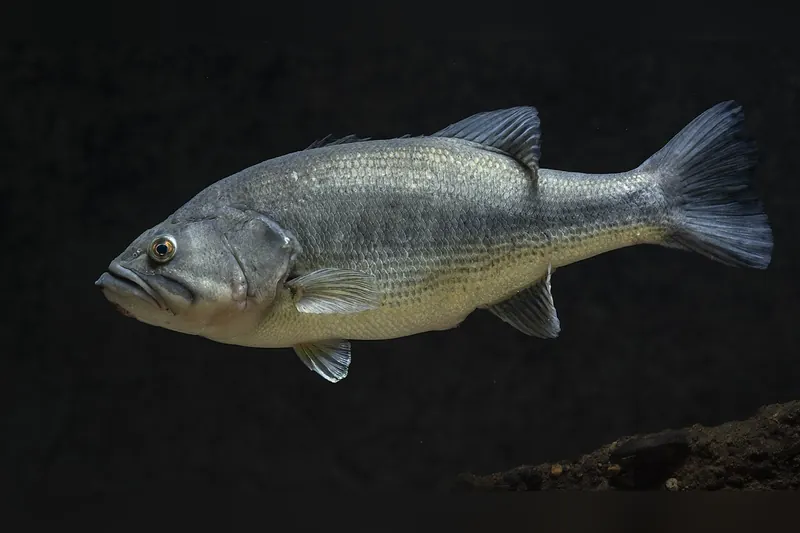
Largemouth bass, side view
Largemouth bass Micropterus salmoides
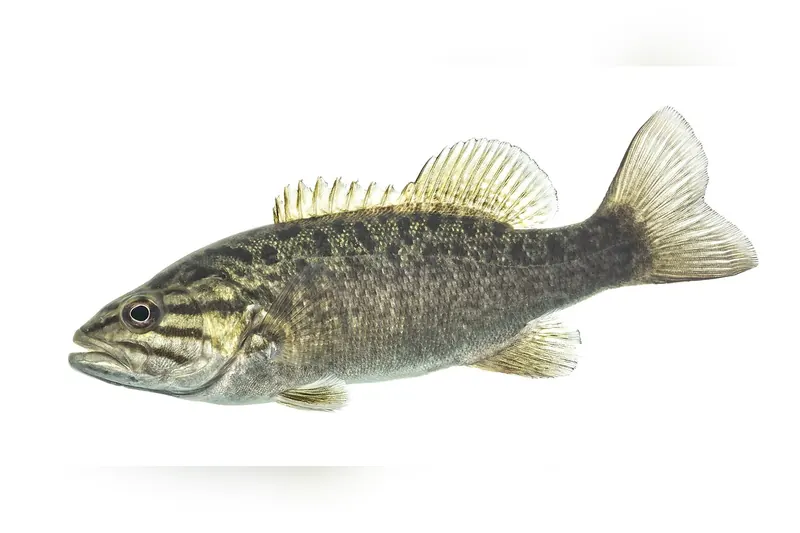
smallmouth bass, side view
smallmouth bass Micropterus dolomieu

The quick difference

Largemouth bass: The smallmouth bass has a smaller mouth that ends below the eye, dark vertical bars instead of a horizontal stripe and only a shallow notch in the dorsal fin. A 2022 study treats the Florida bass as a separate species named Micropterus salmoides and the northern largemouth as Micropterus nigricans (English Wikipedia); TPWD and FishBase still list it as M. salmoides.

Smallmouth bass: The largemouth bass has a bigger mouth that extends past the eye, a dark horizontal stripe instead of vertical bars and a deeply notched dorsal fin (Wikipedia).

Side by side

How to recognise it

Largemouth bass
  • Big mouth: the upper jaw extends past the rear edge of the eye
  • Olive green to greenish gray with a dark, jagged horizontal stripe along the side
  • Dorsal fin almost split in two by a deep notch, the spiny front part lower than the soft rear part
smallmouth bass
  • Golden olive to dark brown with dark vertical bars or blotches on the sides
  • Jaw ends below the eye, not behind it; eye red or brown
  • Spiny and soft parts of the dorsal fin separated only by a shallow notch

Size and age

Largemouth bassup to 97 cm · 10.1 kg · 23 years
smallmouth bassup to 69 cm · 5.4 kg · 26 years

Habitat

Largemouth bassNative to the eastern and central United States, southeastern Canada and northern Mexico (Great Lakes, St. Lawrence and Mississippi basins south to Texas and Florida); stocked as a game fish around the world. Prefers quiet, fairly clear water with plenty of shoreline vegetation and cover such as weeds, logs, rock ledges and docks; also enters brackish water (Wikipedia, TPWD).
smallmouth bassNative to the upper and middle Mississippi basin, the St. Lawrence and Great Lakes system and the Hudson Bay basin; stocking has spread it to most U.S. states, and it has been introduced in parts of Europe. Lives in clearer, cooler water than the largemouth: streams and rivers with gravel and rock, and rocky areas of large, deep lakes; handles stronger current (Wikipedia, TPWD).

Spawning

Largemouth bassSpring, once the water stays above about 60 °F (16 °C): in the South from March to June, in the North from late April to early July. The male fans out a nest on sand or gravel and guards eggs and fry (Wikipedia, TPWD; general guide, varies by region)
smallmouth bassSpring to early summer at about 59 to 64 °F (15 to 18 °C); the male builds the nest on clean gravel or rock and guards eggs and fry for up to a month (Wikipedia, TPWD; general guide, varies by region)

Methods

Largemouth bassTexas-rigged soft plastic worm, Spinnerbaits and crankbaits, Topwater lures around weeds and wood, Live bait such as shiners
smallmouth bassCrankbaits, jerkbaits and spinnerbaits, Soft plastics such as tubes and grubs on a jighead, Fly fishing with streamers, crawfish patterns or poppers

Baits

Largemouth bassSoft plastic worm, Jig, Spinnerbait, Crankbait, Live golden shiner, Crawfish
smallmouth bassTube, Curly tail grub, Hair jig, Crankbait, Small inline spinner, Crawfish

On the table

Largemouth bassEdible, though in the USA it is usually released.
smallmouth bassSmaller fish from cool water give a white, firm fillet; usually released.

Conservation status

Largemouth bassIUCN: not threatened (Least Concern, 2018). Invasive in many places outside its native range and listed among the world's 100 worst invasive alien species (Wikipedia). Size limits, bag limits and seasons are set by each state: check with your state fish and wildlife agency before fishing. Never move live fish to other waters.
smallmouth bassIUCN: not threatened (Least Concern, 2012). Introduced outside its native range, and several countries report harm to native species (FishBase). Regulations are set by each state: check with your state fish and wildlife agency before fishing. Never move live fish to other waters.

Next

Sources (8)

Last checked 2026-10-23. Found a mistake? Write to [email protected].

Know more?

Additions, photos of your catches or a mistake in the text: write to us and we will gladly credit you as a helper.

Send a tip