pescaday

Comparison

Blue catfish vs flathead catfish: how to tell them apart

How to tell Blue catfish from flathead catfish, with features, size, habitat and baits side by side.
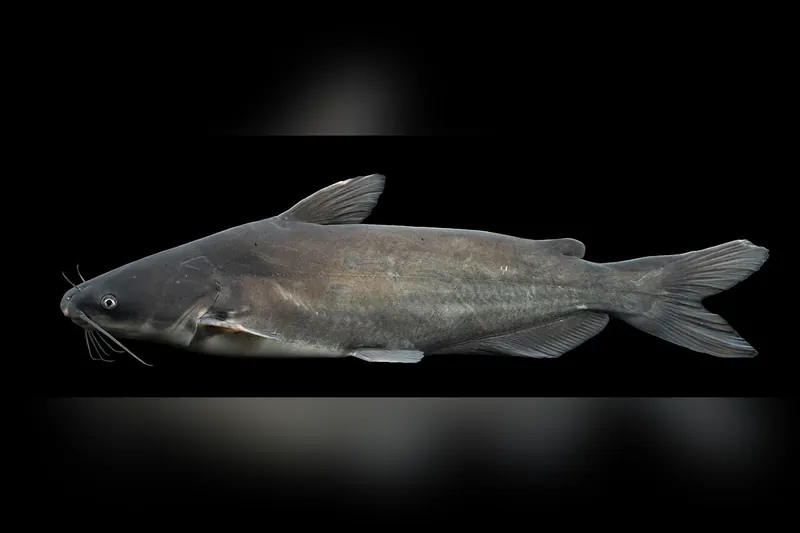
Blue catfish, side view
Blue catfish Ictalurus furcatus
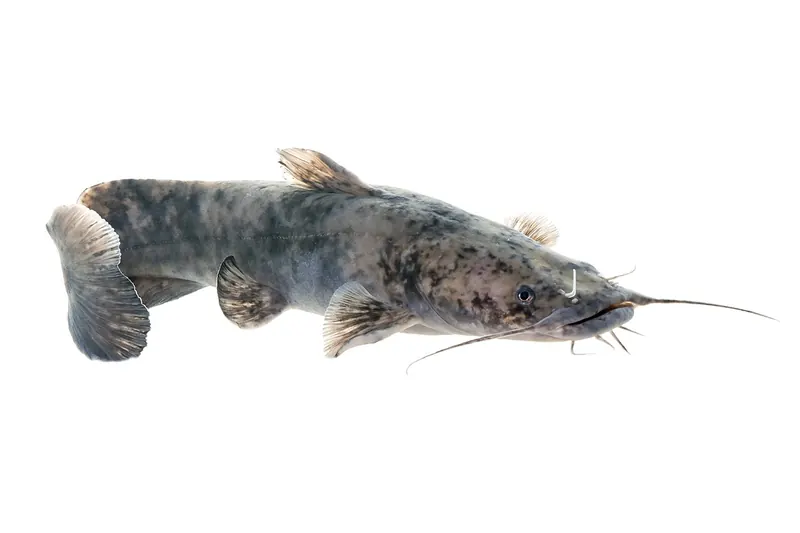
flathead catfish, side view
flathead catfish Pylodictis olivaris

The quick difference

Blue catfish: Channel catfish: the most reliable feature is the anal fin with only 25 to 29 rays (Wikipedia), plus usually dark spots; blue catfish mostly lack them, only the Rio Grande population is spotted (German Wikipedia). Flathead catfish: flat head, protruding lower jaw and barely forked tail (rule of thumb).

Flathead catfish: Channel and blue catfish: deeply forked tail, protruding upper rather than lower jaw and a much longer anal fin (Wikipedia, rule of thumb). Bullheads: smaller, with a square tail and without the broad flat head (rule of thumb).

Side by side

How to recognise it

Blue catfish
  • Heavy, blue-gray body with a hump in front of the dorsal fin, usually without spots (English and German Wikipedia)
  • Deeply forked tail, protruding upper jaw, eight barbels, adipose fin (Wikipedia, rule of thumb for barbel count in North American catfish)
  • Long anal fin with 30 to 36 rays (English and German Wikipedia)
flathead catfish
  • Broad, flat head, small eyes, lower jaw clearly protruding (Wikipedia)
  • Olive to brown, often darkly mottled, belly white to yellow; upper tail lobe with a light margin or spot, especially in young fish (English and German Wikipedia)
  • Tail only slightly notched, short rounded anal fin with 14 to 17 rays (Wikipedia)

Size and age

Blue catfishup to 165 cm · 68.0 kg · 21 years
flathead catfishup to 155 cm · 55.8 kg · 25 years

Habitat

Blue catfishMississippi basin from western Pennsylvania to South Dakota and the Platte River in Nebraska, south to the Gulf; Gulf Slope to the Rio Grande in Texas and New Mexico and Mexico; introduced on the Atlantic slope, in the West and in Minnesota (FishBase). Wikipedia gives Belize and Guatemala as the southern limit. Lives in deep water of reservoirs, main channels and backwaters of medium to large rivers over mud, sand and gravel, preferring clear, strongly flowing water, down to 50 m; on the bottom in deep areas by day, moving into swifter water at night to feed (FishBase). Tolerates brackish water and is considered invasive in Chesapeake Bay and Albemarle Sound (Wikipedia).
flathead catfishLower Great Lakes and Mississippi basin from western Pennsylvania to the White-Little Missouri system in North Dakota, south to Louisiana; Gulf Slope from Mobile Bay to Mexico; transplanted elsewhere in the US (FishBase). Adults live in pools with logs and debris in small to large rivers, also lakes and reservoirs; young in rocky and sandy runs (FishBase). Prefers medium to large, warm rivers with steady, slow current, undercut banks and woody debris; home range usually less than 2 km (Wikipedia). In some waters where it was introduced it harms native species (German and English Wikipedia).

Spawning

Blue catfishOnce a year from May to June; females produce 2,000 to 4,000 eggs per pound of body weight (Wikipedia). Eggs are deposited in nests under logs, brush or riverbanks, males often build nests in pools or backwaters (FishBase).
flathead catfishLate June and early July at 19 to 24 °C (66 to 75 °F) water temperature and steady current, in nests by submerged logs and debris; the male builds the nest, guards the clutch and fans it with oxygen; on average 2,640 eggs per kg of body weight, roughly 100,000 per female (Wikipedia). German Wikipedia gives June and July.

Methods

Blue catfishBottom fishing with cut bait in channels and below dams (Wikipedia on spillways, rule of thumb), Drifting natural baits over deep river stretches (rule of thumb), Anchoring on deep ledges, especially at night (German Wikipedia on feeding time, rule of thumb), Open-water fishing beneath feeding schools of striped bass in reservoirs (Wikipedia)
flathead catfishLive bait fishing at woody cover and undercut banks (Wikipedia on habitat, rule of thumb), Bottom fishing at night in pools below eddies (rule of thumb), Float rig with live bait over brush piles (rule of thumb), Slowly hopping a jig with a curly tail along the bottom (rule of thumb)

Baits

Blue catfishFresh cut bait (shad, herring), Whole bait fish, Mussel or clam meat, Sausage or stink bait (rule of thumb), Crayfish
flathead catfishLive sunfish (where legal), Live shad or minnow, Live small bullhead, where legal, Large curly tail grub on a jig head, Crayfish

On the table

Blue catfishA food fish, also farmed.
flathead catfishConsidered a good food fish by anglers.

Conservation status

Blue catfishIUCN: Least Concern (2012; FishBase). Licence, minimum size and limits are set by each state. Example Texas: channel and blue catfish combined 25 fish per day, only 10 of them 20 inches or longer, no minimum length; special rules may apply to some waters (TPWD, Bag and Length Limits, accessed 21 Oct 2026). In Virginia and Chesapeake Bay it is considered invasive (Wikipedia). Careful when unhooking: the pectoral and dorsal fins carry spines (rule of thumb).
flathead catfishIUCN: Least Concern (2012; FishBase). Licence, minimum size and limits are set by each state. Example Texas: 5 flathead catfish per day, minimum length 18 inches; special rules may apply to some waters (TPWD, Bag and Length Limits, accessed 21 Oct 2026). Whether and which live bait fish are allowed is set by each state: check before you fish. Outside its native range it is considered invasive in places (Wikipedia).

Next

Sources (9)

Last checked 2026-10-23. Found a mistake? Write to [email protected].

Know more?

Additions, photos of your catches or a mistake in the text: write to us and we will gladly credit you as a helper.

Send a tip