Fishing charter guide · USA
Fishing charters
How to choose a fishing charter in the USA: inshore or offshore, half or full day, what is included and who needs a license, with a checklist for booking.
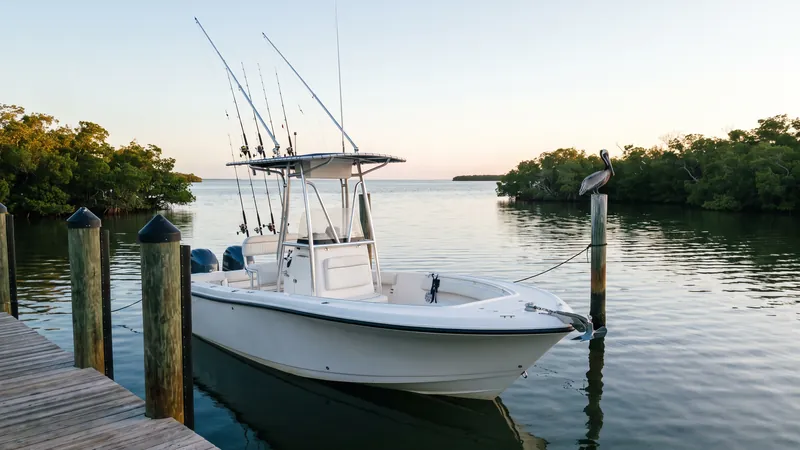
Inshore, reef or offshore
- Inshore
- Bays, flats, marshes and mangroves close to the coast. Calmer water and smaller boats, a good first trip and good for kids. Typical: red drum, spotted seatrout, snook, tarpon.
- Reef and wreck
- Further out over reefs and wrecks. Bottom fishing and light trolling for snapper, grouper and kingfish.
- Offshore (deep sea)
- Far out in deep, blue water. A longer run, rougher sea and bigger fish: mahi-mahi, tuna, sailfish and marlin.
- Lakes, rivers and Alaska
- Charters also run on big lakes and rivers, and in Alaska for salmon and halibut. King salmon there needs a King Salmon Stamp on top of the license.
Half day, full day or longer
- Half day. Good for a first trip, for kids and for inshore fishing close to port.
- Full day. Worth it offshore, where the run to the fishing grounds takes part of the day, and for big game.
- Overnight or multi-day. For far-off grounds and serious big game. Ask about sleeping, food and the sea forecast.
- Private or shared. A private charter is your group alone. On a shared trip, often called a party boat or head boat, you pay per person and fish next to others.
Booking checklist
Ask these before you pay and tick them off. Your ticks stay on this device.
Fishing license on a charter
Who needs a license on a charter depends on the state: in some the boat covers its passengers, in others every angler buys a license. Ask the captain when you book and check the state agency. Fishing license by state
States with a separate charter passenger license, from our state pages:
- Louisiana: Charter passenger, saltwater, 3 days $20, Charter passenger, freshwater, 3 days $10 (Louisiana Department of Wildlife and Fisheries (LDWF))
Offshore: state and federal waters
At sea the US has two layers: state waters usually reach 3 nautical miles from the coast, off Texas, Florida's Gulf coast and Puerto Rico 9 nautical miles. Beyond that, federal waters begin, with extra federal rules on seasons and bag limits. You buy your saltwater license from the state. For tuna and billfish in the Atlantic and the Gulf of Mexico (called Gulf of America by U.S. federal agencies), the boat also needs a federal HMS permit.
Sources: NOAA, Maritime Zones and Boundaries · NOAA Fisheries, Atlantic HMS Permits (updated 28.01.2026)
Fishing charters near me
Charters leave from marinas, harbors and boat ramps. The Pescaday map shows bait and tackle shops, public fishing spots and tide stations around you; charters are not on the map yet. The bait shop by the harbor is a good place to ask about local captains.
Charter trips abroad and in the Keys
Quick answers
How do I choose a fishing charter?
Decide inshore or offshore first, then half or full day, private or shared. Before you book, ask what the price includes, who covers the fishing license and what happens if the weather turns.
Inshore or offshore: which is better for beginners?
Inshore is the easier start for most beginners: calmer water, shorter runs and steady action. Offshore means longer days at sea and bigger fish, but a higher risk of seasickness.
Do I need a fishing license on a charter?
It depends on the state. In some states the boat covers its passengers, in others every angler buys a license, and Louisiana sells a special charter passenger license. Ask the captain and check the state agency.
How do I find fishing charters near me?
Charters leave from marinas, harbors and boat ramps. Use the Pescaday map of fishing spots and bait shops near you to find the nearest harbor, then compare the charters there.