Comparison
Zander vs walleye: how to tell them apart
How to tell Zander from walleye, with features, size, habitat and baits side by side.
Choose a page
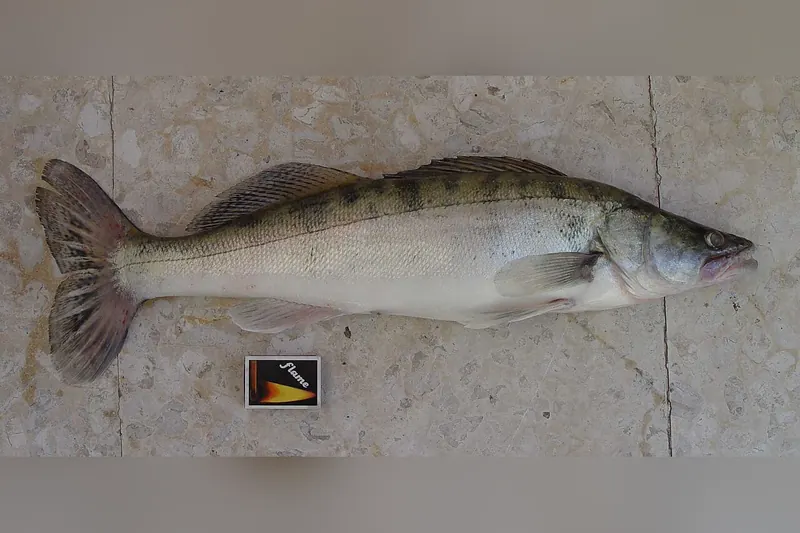
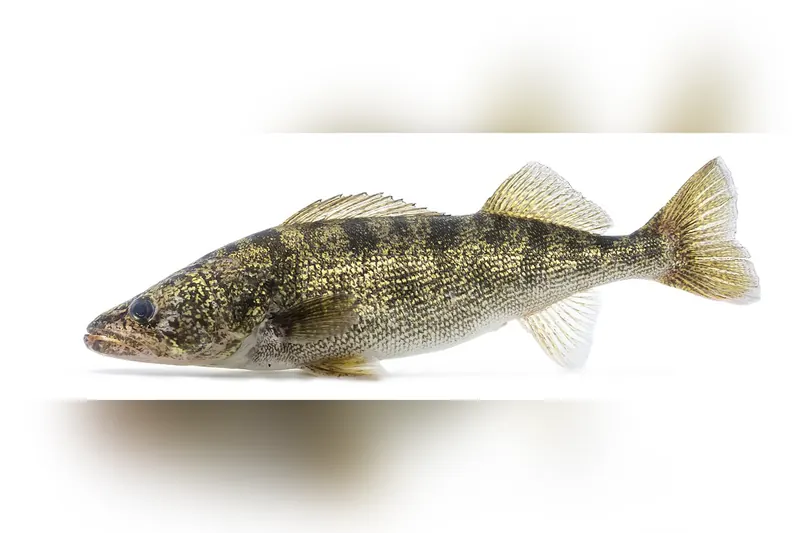
The quick difference
Walleye: The sauger (Sander canadensis) lacks the white tip on the tail and has rows of black dots on both dorsal fins and the tail (Wikipedia). The European zander is a close relative; a U.S. court ruling bars selling zander fillets as walleye (German Wikipedia).
Side by side
How to recognise it
Zander
- Slim, spindle-shaped body with a pointed head
- Two dorsal fins, the front one with spiny rays
- Long fangs in a deeply split mouth, grey-green flanks with bands
walleye
- Large, milky looking eye (a reflective layer behind the retina)
- Two separate dorsal fins, the spiny front one with a dark blotch at its rear base
- Olive back, golden sides with dark saddles, white tip on the lower lobe of the tail; sharp teeth
Size and age
Zanderup to 100 cm · 20.0 kg · 17 years
walleyeup to 107 cm · 11.3 kg · 29 years
Habitat
ZanderSlow-flowing rivers, canals, lakes and lagoons, preferring large waters from around four to five metres deep. Also found in the brackish water of the Baltic Sea.
walleyeNative to most of Canada and the northern United States, from Quebec to the Northwest Territories and south to Alabama and Arkansas; stocking has spread it further. Lives in large lakes, reservoirs and rivers; shallower and over rocky bottoms in spring and fall, deeper in summer (Wikipedia, FishBase).
Spawning
ZanderApril to June (general guide, varies by region)
walleyeLate winter to spring at 43 to 50 °F (6 to 10 °C) (German Wikipedia: February to April); fish run up tributaries or onto gravel and rock reefs, spawn mostly at night and give no parental care (Wikipedia, TPWD; general guide, varies by region)
Methods
ZanderLure fishing on the bottom (jigging), Bottom fishing with a bait fish, Fly fishing with a sinking line
walleyeJigging with a live minnow or soft plastic, Trolling crankbaits, Night fishing with live bait, Ice fishing in winter
Baits
ZanderSoft plastic shad, Plug (crankbait), Twister tail, Dead, slender bait fish
walleyeLive minnow, Leech, Nightcrawler, Jig with soft plastic, Crankbait
On the table
ZanderA prized food fish with firm, white, boneless fillets.
walleyeRegarded as a very good food fish.
Conservation status
ZanderGerman Red List (freshwater fish 2023): not threatened. IUCN: not threatened (Least Concern, 2022).
walleyeIUCN: not threatened (Least Concern, 2012). Because it is so popular, most agencies regulate harvest with bag and length limits (Wikipedia): check your state or provincial rules before fishing.
Next
Sources (7)
- de.wikipedia.org/wiki/Glasaugenbarsch
- de.wikipedia.org/wiki/Zander
- en.wikipedia.org/wiki/Walleye
- tpwd.texas.gov/huntwild/wild/species/walleye/
- fishbase.se/summary/Sander-lucioperca.html
- fishbase.se/summary/Sander-vitreus.html
- rote-liste-zentrum.de/detail/pdf/91301
Last checked 2026-10-23. Found a mistake? Write to [email protected].
Know more?
Additions, photos of your catches or a mistake in the text: write to us and we will gladly credit you as a helper.
Send a tip