pescaday

Comparison

Channel catfish vs blue catfish: how to tell them apart

How to tell Channel catfish from blue catfish, with features, size, habitat and baits side by side.
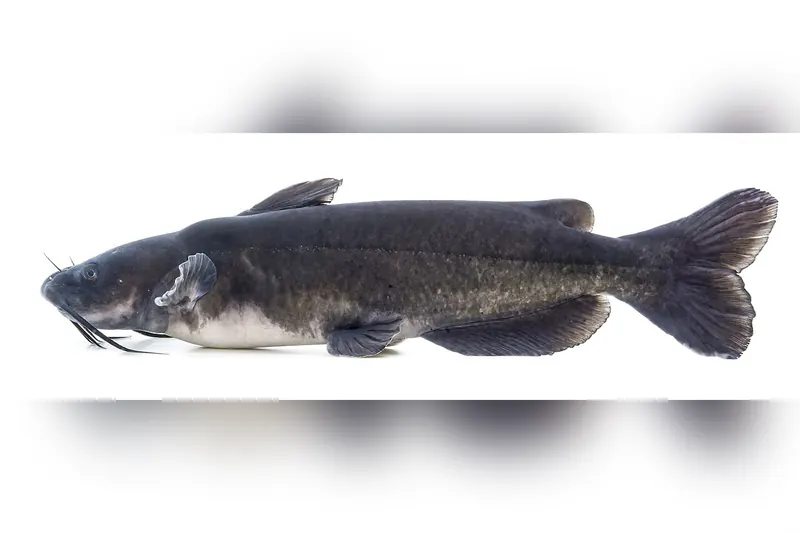
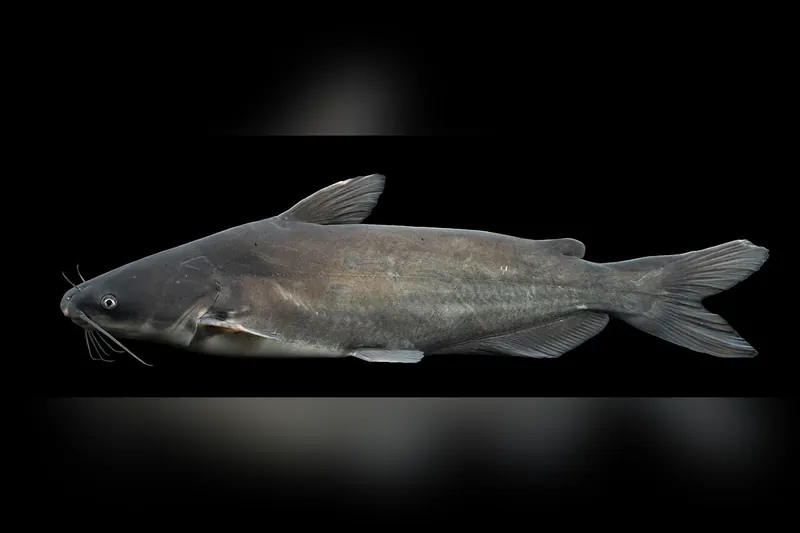
Channel catfish, side view
Channel catfish Ictalurus punctatus
blue catfish, side view
blue catfish Ictalurus furcatus

The quick difference

Channel catfish: The blue catfish looks very similar but has 30 to 35 rays in the anal fin, the channel catfish only 24 to 29, and it usually lacks spots. The flathead catfish has a protruding lower jaw. The deeply forked tail sets it apart from every other catfish except the blue, including bullheads (TPWD).

Blue catfish: Channel catfish: the most reliable feature is the anal fin with only 25 to 29 rays (Wikipedia), plus usually dark spots; blue catfish mostly lack them, only the Rio Grande population is spotted (German Wikipedia). Flathead catfish: flat head, protruding lower jaw and barely forked tail (rule of thumb).

Side by side

How to recognise it

Channel catfish
  • No scales, back olive brown to slate blue, belly silvery white
  • Eight barbels, deeply forked tail and an adipose fin
  • Usually many small black spots on the sides, often faded in big adults; upper jaw sticks out past the lower jaw
blue catfish
  • Heavy, blue-gray body with a hump in front of the dorsal fin, usually without spots (English and German Wikipedia)
  • Deeply forked tail, protruding upper jaw, eight barbels, adipose fin (Wikipedia, rule of thumb for barbel count in North American catfish)
  • Long anal fin with 30 to 36 rays (English and German Wikipedia)

Size and age

Channel catfishup to 132 cm · 26.3 kg · 24 years
blue catfishup to 165 cm · 68.0 kg · 21 years

Habitat

Channel catfishNative to southern Canada, most of the United States between the Appalachians and the Rockies (mainly the Mississippi basin), peninsular Florida and northern Mexico; widely introduced elsewhere. Lives in rivers, reservoirs, lakes and ponds, and is most abundant in large rivers with low to moderate current (Wikipedia, TPWD).
blue catfishMississippi basin from western Pennsylvania to South Dakota and the Platte River in Nebraska, south to the Gulf; Gulf Slope to the Rio Grande in Texas and New Mexico and Mexico; introduced on the Atlantic slope, in the West and in Minnesota (FishBase). Wikipedia gives Belize and Guatemala as the southern limit. Lives in deep water of reservoirs, main channels and backwaters of medium to large rivers over mud, sand and gravel, preferring clear, strongly flowing water, down to 50 m; on the bottom in deep areas by day, moving into swifter water at night to feed (FishBase). Tolerates brackish water and is considered invasive in Chesapeake Bay and Albemarle Sound (Wikipedia).

Spawning

Channel catfishLate spring to early summer when the water reaches about 75 °F (24 °C); spawns in dark cavities such as undercut banks, hollow logs or drift piles, and the male guards eggs and fry (TPWD; general guide, varies by region)
blue catfishOnce a year from May to June; females produce 2,000 to 4,000 eggs per pound of body weight (Wikipedia). Eggs are deposited in nests under logs, brush or riverbanks, males often build nests in pools or backwaters (FishBase).

Methods

Channel catfishBottom fishing with natural bait, Slip bobber fishing near the bottom, Soaking cut bait or stink bait
blue catfishBottom fishing with cut bait in channels and below dams (Wikipedia on spillways, rule of thumb), Drifting natural baits over deep river stretches (rule of thumb), Anchoring on deep ledges, especially at night (German Wikipedia on feeding time, rule of thumb), Open-water fishing beneath feeding schools of striped bass in reservoirs (Wikipedia)

Baits

Channel catfishChicken liver, Nightcrawler, Cut shad, Shrimp, Stink bait, Grasshopper
blue catfishFresh cut bait (shad, herring), Whole bait fish, Mussel or clam meat, Sausage or stink bait (rule of thumb), Crayfish

On the table

Channel catfishAn important and valued food fish in the southern USA.
blue catfishA food fish, also farmed.

Conservation status

Channel catfishIUCN: not threatened (Least Concern, 2012). Outside its native range, including parts of the U.S., it harms native species (Wikipedia). Regulations are set by each state: check with your state fish and wildlife agency before fishing. Handle with care: the pectoral and dorsal fins carry sharp spines.
blue catfishIUCN: Least Concern (2012; FishBase). Licence, minimum size and limits are set by each state. Example Texas: channel and blue catfish combined 25 fish per day, only 10 of them 20 inches or longer, no minimum length; special rules may apply to some waters (TPWD, Bag and Length Limits, accessed 21 Oct 2026). In Virginia and Chesapeake Bay it is considered invasive (Wikipedia). Careful when unhooking: the pectoral and dorsal fins carry spines (rule of thumb).

Next

Sources (10)

Last checked 2026-10-23. Found a mistake? Write to [email protected].

Know more?

Additions, photos of your catches or a mistake in the text: write to us and we will gladly credit you as a helper.

Send a tip