Species
Common bream
A deep-bodied peaceful fish, also called Blei in German, that feeds on the bottom in large shoals and is a typical feeder fishing catch.
Abramis brama
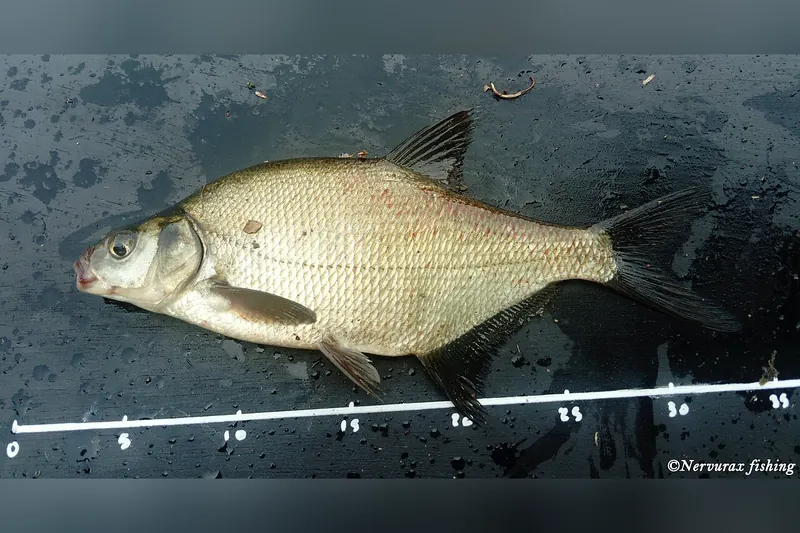
Photo: Nervurax Fishing, Wikimedia Commons, CC BY-SA 4.0, adjusted to 3:2
- Spawning
- April to July (general guide, varies by region)
- German Red List
- not threatened
- Typical method
- Feeder fishing
- Top bait
- Maggots
How to recognise it
- Very deep-bodied and strongly flattened from the sides
- Slightly underslung mouth it can push out
- Grey fins, long pectoral fins reaching the base of the pelvic fins
Easily confused with: Often mistaken for the silver bream: in the common bream, the pectoral fins laid flat reach the base of the pelvic fins.
How to catch it
Methods: Feeder fishing, Pole fishing, Float fishing
Baits: Maggots, Sweetcorn, Redworm, Casters
At dusk and at night, especially from late spring to autumn.
Habitat and food
Slow-flowing lower river stretches, canals, harbours and nutrient-rich lakes with a muddy bottom. Lives in shoals close to the bottom.
Roots in the mud for midge larvae (bloodworm), worms, mussels and snails, and also eats plankton and plants.
Size and age
Around 30 to 50 cm at eight years old; in ideal conditions up to 85 cm and over 8 kg. Can live around 16 years (Wikipedia).
Protection and rules
Closed seasons and minimum sizes are set by each German state (and by each country abroad) and can be stricter on individual waters. We are building an overview with sources and check dates. Until then, check the local fishing regulations and the rules of the club or permit for your water.
In the kitchen
Very bony, so rarely eaten as a fillet; good for fish cakes, pickling or smoking.
- Handling your fish properly at the water
- Filleting fish: step by step
- Breaded fried carp
- Fish cakes from coarse fish or pike
Sources (3)
- de.wikipedia.org/wiki/Brasse_(Fisch)
- fishbase.se/summary/Abramis-brama.html
- rote-liste-zentrum.de/detail/pdf/91138
Last checked 2026-10-10. Found a mistake? Write to [email protected].
Know more?
Additions, photos of your catches or a mistake in the text: write to us and we will gladly credit you as a helper.
Send a tip