Species
Atlantic herring
One of the most common fish in the world: a silver shoaling fish that moves into the inlets and harbours of the Baltic Sea in spring.
Clupea harengus
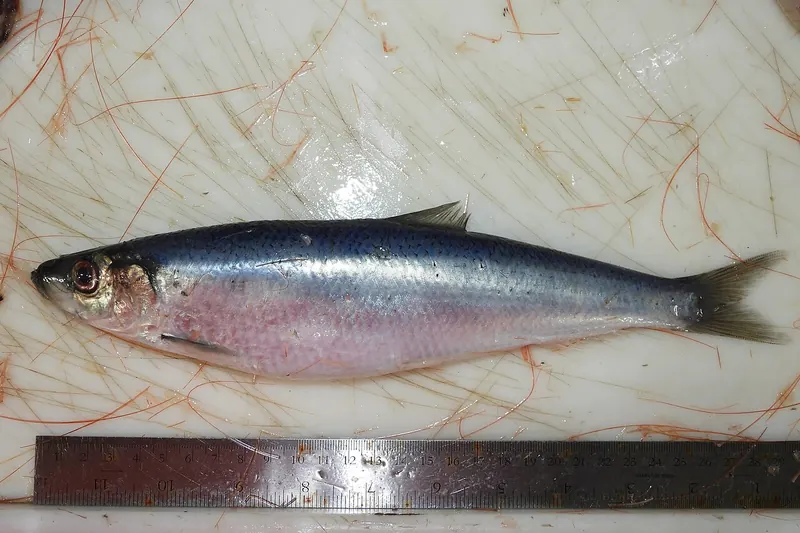
Photo: savoieju, Wikimedia Commons, CC BY 4.0, adjusted to 3:2
- Spawning
- Varies a lot depending on the stock: North Sea herring spawn from August to January, most Baltic herring in spring (general guide, varies by region)
- German Red List
- not threatened
- Typical method
- Paternoster fishing (herring rig)
- Top bait
- Herring rig with fish skin
How to recognise it
- Slim body, flattened from the sides, with silver flanks
- Steel-blue to greenish back, no visible lateral line
- Just one short dorsal fin in the middle of the body, deeply forked tail
Easily confused with: Looks like the sprat: in the herring, the pelvic fins only start behind the front edge of the dorsal fin and the belly scales are not keeled.
How to catch it
Methods: Paternoster fishing (herring rig), Fishing from piers and harbour walls, Boat fishing
Baits: Herring rig with fish skin, Herring rig with glitter flies, Small spoon
In spring, when the spawning shoals move into the inlets, lagoons (Bodden) and harbours of the western Baltic Sea; often deeper during the day, higher up at dusk.
Habitat and food
North Atlantic from the Bay of Biscay across the North Sea and Baltic Sea to the Arctic Ocean, in open water and along the coast down to around 360 m. To spawn, Baltic herring move into shallow water with plant growth.
Zooplankton such as small crustaceans, snails and fish larvae, some of which it filters out of the water; adult herring also eat small fish in autumn.
Size and age
Up to around 45 cm and about 1 kg, usually smaller; can live for more than 20 years (Wikipedia). FishBase: max. 45 cm, heaviest published weight 1.1 kg, maximum age 25 years. Herring in the Baltic Sea stay smaller than those in the North Sea.
Protection and rules
Closed seasons and minimum sizes are set by each German state (and by each country abroad) and can be stricter on individual waters. We are building an overview with sources and check dates. Until then, check the local fishing regulations and the rules of the club or permit for your water.
In the kitchen
An oily, flavourful fish; pan-fried fresh (Brathering), pickled, smoked as Bückling or as Matjes.
Sources (4)
- de.wikipedia.org/wiki/Atlantischer_Hering
- fishbase.se/summary/Clupea-harengus.html
- rote-liste-zentrum.de/detail/pdf/224905
- en.wikipedia.org/wiki/Atlantic_herring
Last checked 2026-10-10. Found a mistake? Write to [email protected].
Know more?
Additions, photos of your catches or a mistake in the text: write to us and we will gladly credit you as a helper.
Send a tip